Sizing your budget
Introduction
Budget follows the goal, not the other way around. Once you know what the campaign is for, this topic helps you decide how much to risk and — just as important — how to split it so you learn as much as possible from the first run.
Why this matters
Spreading a budget across several small creators buys more shots on goal and more learning than one big bet. One macro creator who flops takes the whole budget with them; eight nano creators give you eight data points and usually at least one clear winner you can double down on.
Core concepts
Two rules of thumb. First, for a first program back 5–8 small creators rather than one big one. Second, split the total into three buckets:
- Creator fees — the bulk, spread across your picks.
- Usage rights — a reserve so you can run winning posts as paid ads later (covered in Negotiation).
- Amplification — an optional sliver to boost the one or two posts that pop.
Step-by-step process
- Set a total you're comfortable risking on a test.
- Allocate the three buckets (a common split is ~75% fees, ~15% usage rights, ~10% amplification).
- Decide a per-creator range, then sanity-check each creator's ask before you commit.
- If cash is tight, plan to gift widely and pay only the proven performers.
Per-creator rates vary a lot by platform, niche, and deliverables. Rather than guess, the Influencer Pricing Calculator gives you a fair-rate ballpark before you negotiate (we go deeper in Negotiation).
Real-world examples
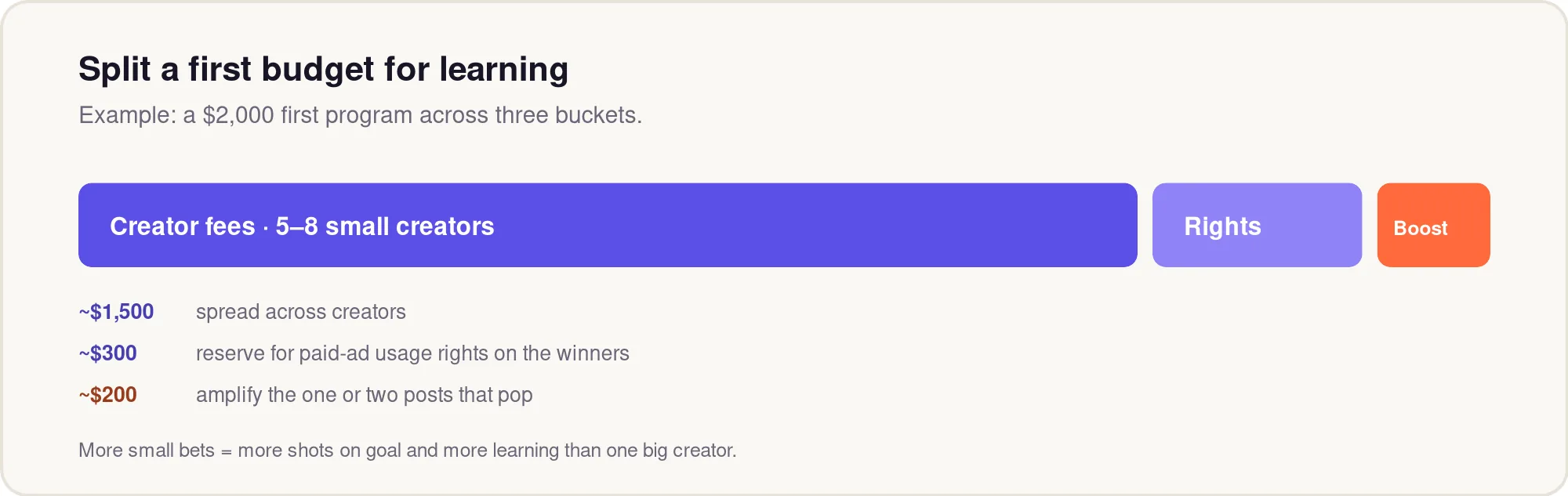
Example: on a $2,000 first budget, a brand spends ~$1,500 across six nano creators, holds ~$300 to buy ad usage rights on whoever performs, and keeps ~$200 to boost the single best post. One creator drives most of the orders — and because the rights reserve was there, that post becomes a paid ad that runs for months.
Common mistakes
- Spending it all on one big creator — one flop and the test is over.
- Forgetting to budget for paid-ad usage rights on the winners.
- Guessing rates instead of checking a fair range first.
Best practices
- Treat the first budget as tuition — its job is to find your winners, not to scale.
- Keep some budget unspent until you see early results, then reallocate to what's working.
- Gift to widen reach cheaply; reserve cash for the few who convert.
Key takeaways
- Size the budget to the goal, then spread it across 5–8 creators.
- Split into fees, a usage-rights reserve, and amplification.
- Ballpark fair rates before you commit; don't guess.
Next, choose the deal model that fits your goal and budget.